Sound words
Some English sounds carry a feeling. sl- feels slippery, sn- feels like the nose, -ash feels like a sudden hit. These sound families are called phonesthemes. They are not real roots like dis- or -ment: they are patterns your ear feels. Tap ▶ to hear the words.
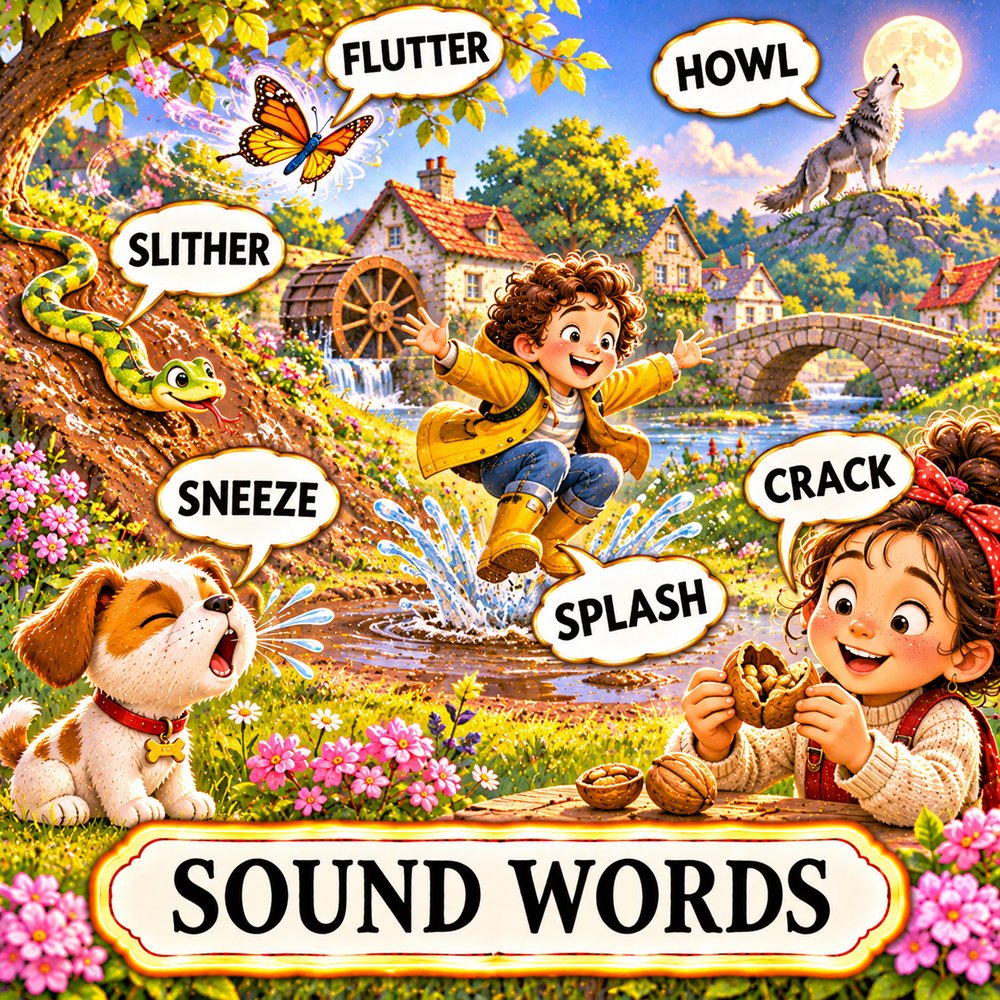
You already know these words
You have never seen these words in a dictionary. Guess anyway!
Ten sound families
Tap any word to hear it. Listen for the feeling the sound gives.
crack
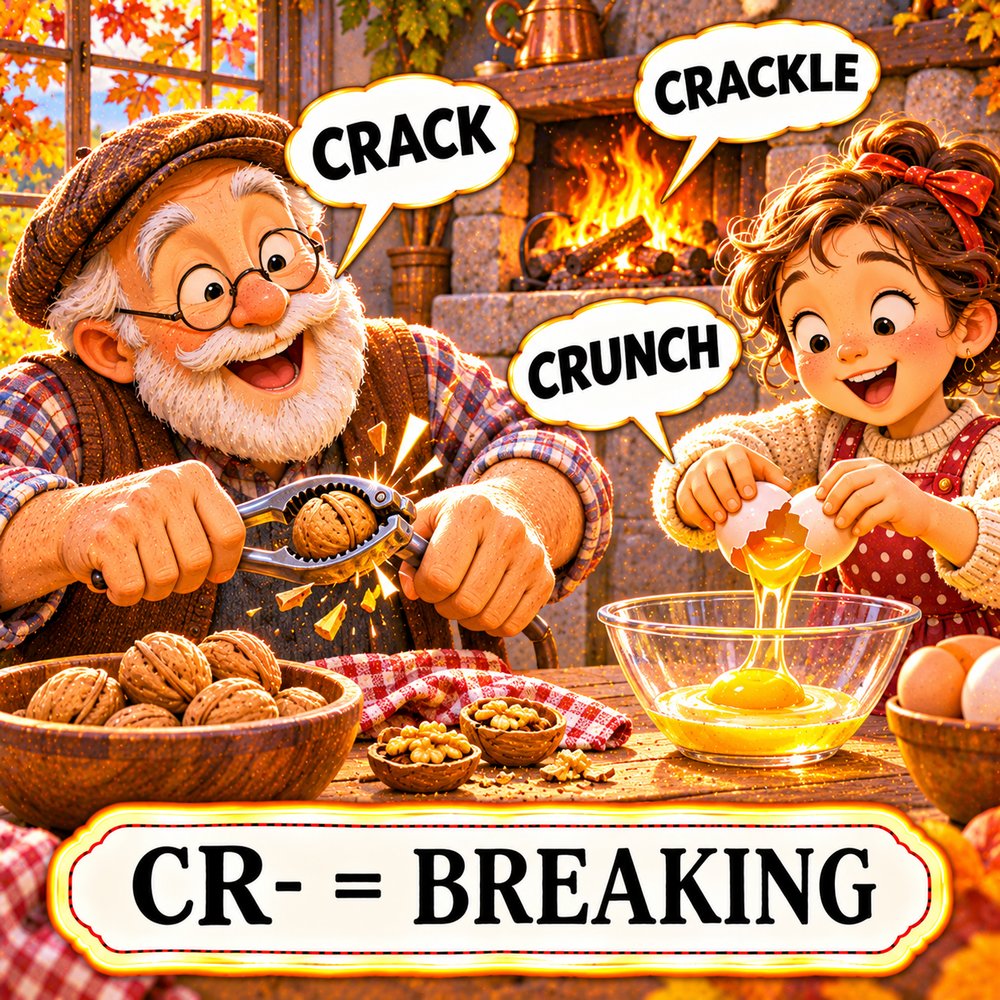
Sound family: crash · crunch · creak · croak · crumble
Old English cracian, “to make a sharp noise”, with cousins in Dutch kraken and German krachen.
No PIE root: it is imitative, a word that copies the sound itself. Say it slowly: c-r-a-ck, the sound breaks in the middle.
Add -le (again and again) and you get crackle: many small cracks, like a fire.
batter
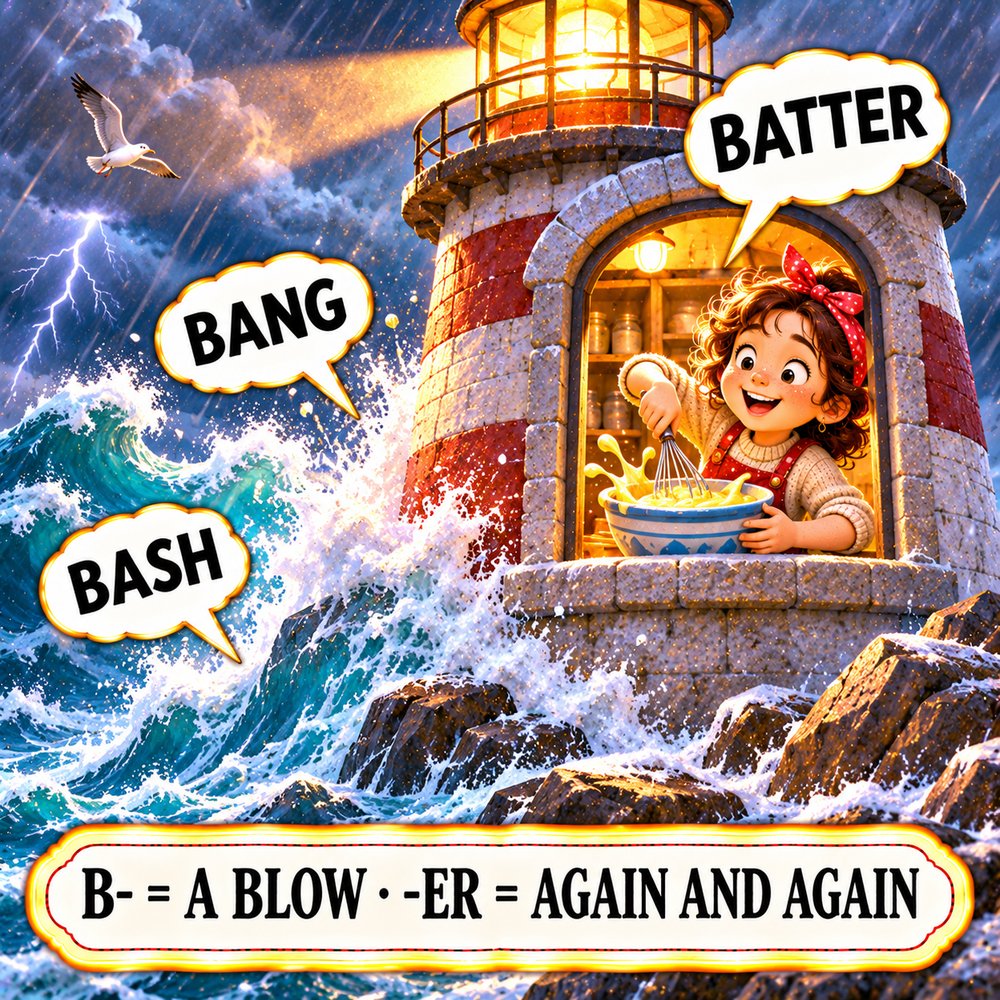
Sound family: bang · bash · bump · beat · flutter · slither · crackle · sparkle · wriggle
From Old French batre, “to beat” (Latin battuere), probably with the English -er of repeated action: to beat again and again.
The same word gives battle, combat, debate, cake batter (beaten eggs and flour), and battery: first a group of guns pounding a wall, then a row of electric cells.
The storm battered the coast: hit after hit after hit.
flutter
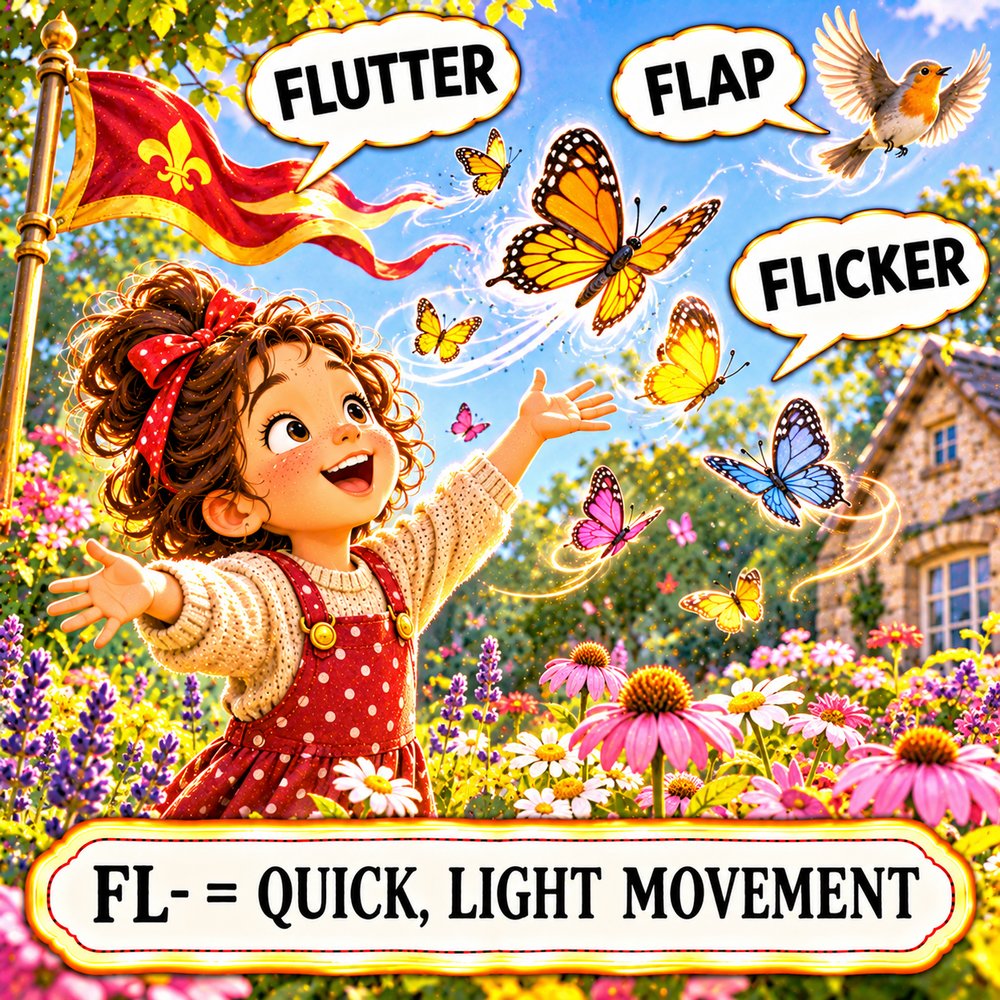
Sound family: flap · flicker · flit · fly · flash · batter · slither · crackle · sparkle · wriggle
Old English floterian, “to float back and forth”: flotian (float) + -erian (again and again).
PIE *plew-, “to flow, to float”: also flow, flood, float, fleet, and Sanskrit plu- (प्लु), “to float, to swim”.
A butterfly flutters: light, quick, again and again.
howl
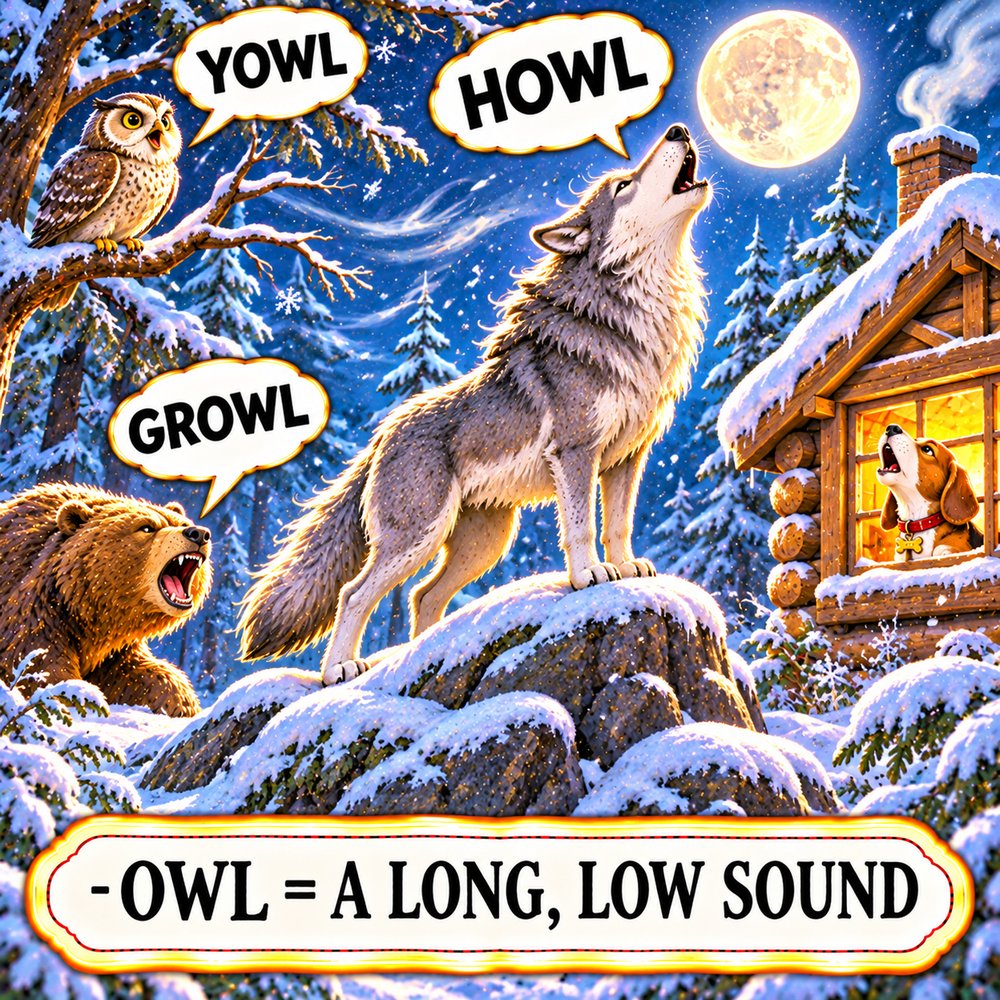
Sound family: growl · yowl · scowl
Middle English houlen (around 1300), with cousins in German heulen and Dutch huilen.
No PIE root: it copies the long cry of a wolf or the wind. The owl may be named the same way: after its call.
Say it slowly: hoooowl. The long vowel IS the meaning.
splash
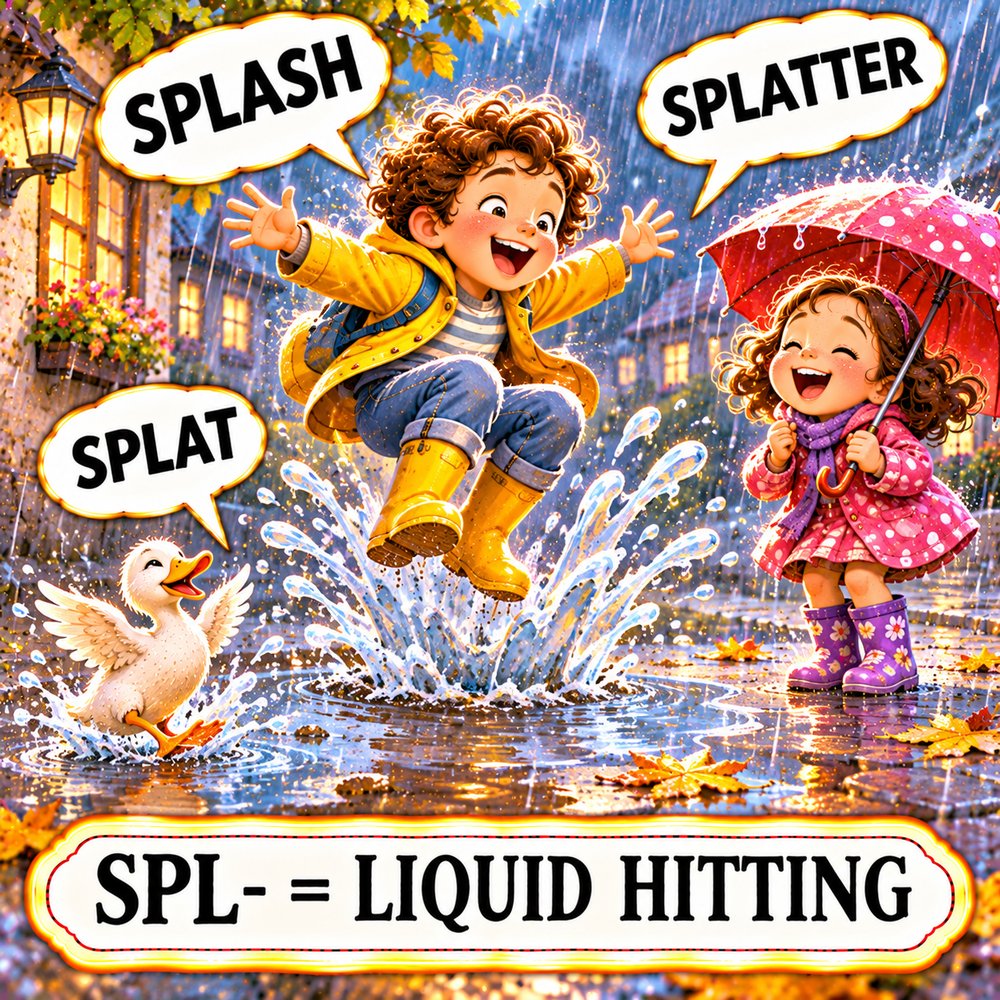
Sound family: splatter · splutter · splodge · splat · crash · smash · bash · dash · clash
Younger than you think: 1715. It is the older word plash (imitative, like Dutch plassen) with an extra s- in front to make it louder and stronger.
No PIE root: it copies the sound of water being hit.
spl- (liquid) + -ash (a sudden hit): the word is the sound!
slither
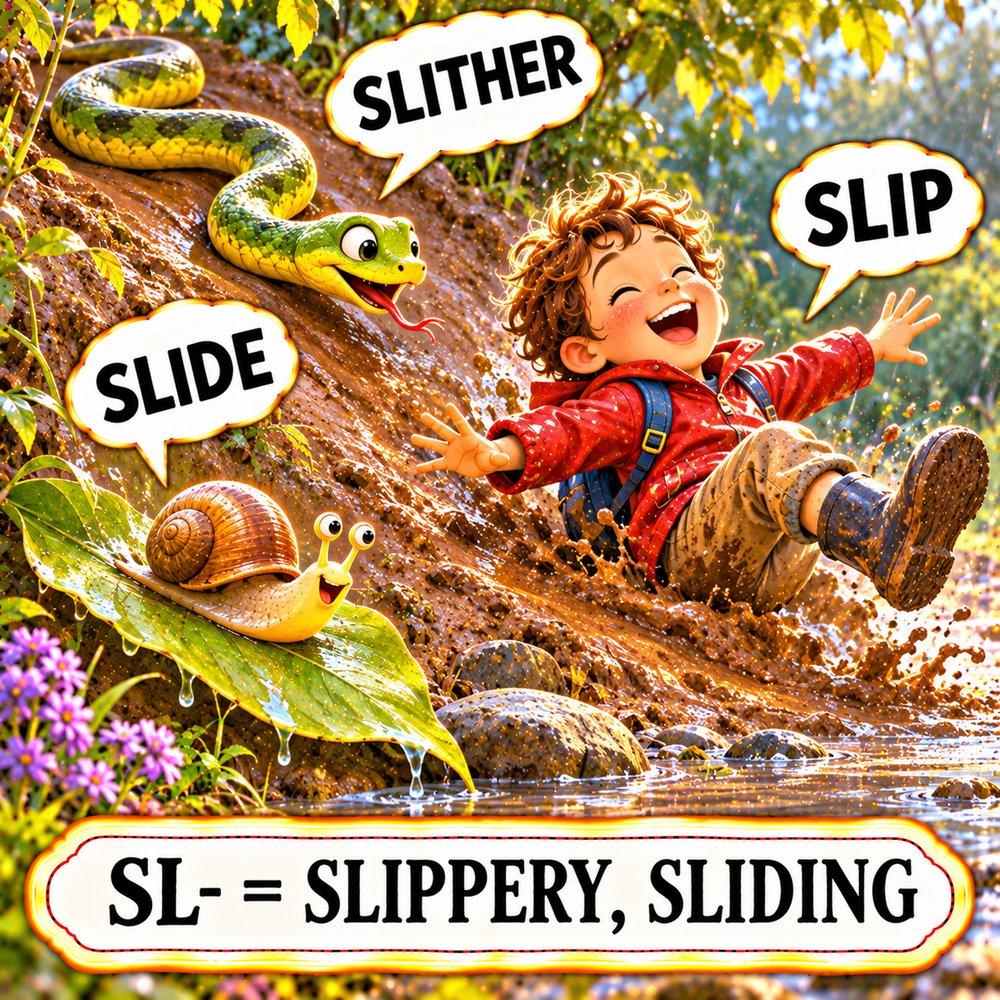
Sound family: slip · slide · slime · slush · slope · flutter · batter · crackle · sparkle · wriggle
Old English slidrian, “to slip”: slīdan (slide) + -er (again and again). So to slither is to keep sliding.
PIE *sleydʰ-, “slippery”: here the sl- feeling really is the root.
A snake slithers: slide, slide, slide.
sneeze
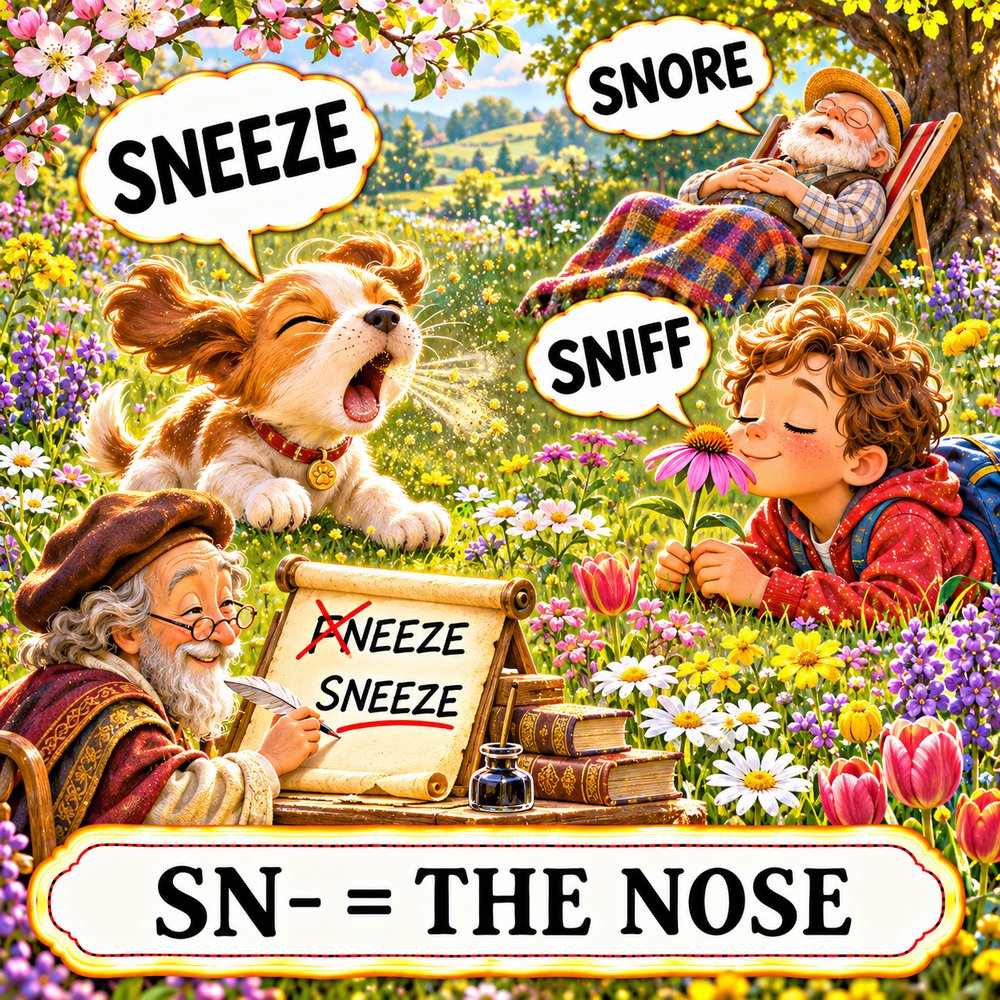
Sound family: sniff · snore · snort · snout · snuffle
Old English fnēosan: it began with fn-! Medieval scribes and printers confused f with the tall long s (ſ), and fneeze slowly became sneeze. It probably stuck because sn- already “sounded like the nose”.
PIE *pneu-, “to breathe, to sneeze” (itself imitative): also Greek pneuma (breath), so pneumonia and pneumatic.
A spelling mistake that the nose made right!
Patterns, not rules
Not every fl- word flies (flower, flour), and not every sl- word slides (slow, sleep). Phonesthemes are tendencies: they help you guess and remember, but always check the dictionary.
And remember the difference with Building big words: a prefix like dis- has a real meaning; a sound like sl- only suggests one.
Every language plays with sound
- French: frou-frou (rustling), glouglou (gurgling), patatras (crash!)
- Spanish: chapotear (to splash about), crujir (to crunch, to creak)
- Hindi: echo words like छप-छप chhap-chhap (splash-splash) and टप-टप tap-tap (drip-drip)
- Chinese: sound words (拟声词) like 哗啦 huālā (splash) and 咔嚓 kāchā (crack)
Invent a word
Pick a start and an ending. Then say your new word out loud!
Word histories from the Online Etymology Dictionary and the Oxford English Dictionary. The idea of the phonestheme comes from the linguist J. R. Firth (1930).